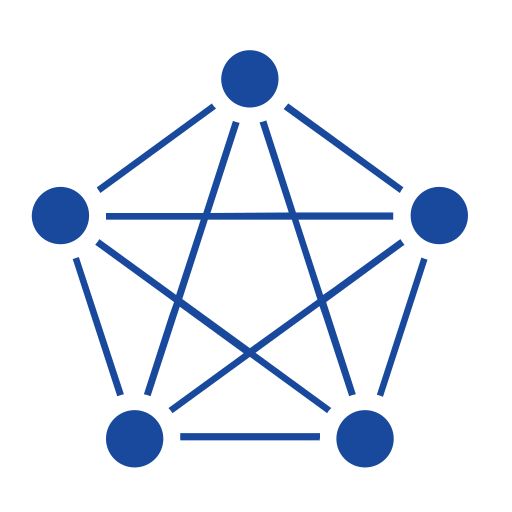

Industrial data rarely lives in one place.
A plant may rely on a historian for process data, a relational database for asset or production information, a time series database for newer applications, and other systems for maintenance, quality, or operational context. Over time, that creates a data landscape made up of different technologies, schemas, and ownership boundaries.
Introducing a new industrial data platform should not mean rebuilding that entire landscape first.
The latest updates to TDengine IDMP move toward a more open industrial data layer: allowing organizations to work with more of their existing industrial data where it already lives, while bringing that data into a common industrial context for modeling, analysis, and AI.

TDengine IDMP can connect to external data sources including MySQL, PostgreSQL, and InfluxDB alongside TDengine TSDB
Work With Industrial Data Where It Already Lives
Traditionally, adopting a new industrial data platform often starts with a migration question.
Which data needs to be copied?
How much history should be moved?
What happens to existing databases and applications?
How long will it take before engineers can actually start using the new environment?
TDengine IDMP is reducing that dependency.
With external data references and federated query capabilities introduced in recent IDMP releases, data does not always need to be moved into TDengine TSDB before it can become part of the IDMP environment.
IDMP now supports connections to MySQL, PostgreSQL, and InfluxDB in addition to TDengine TSDB.
That distinction matters.
The value is not simply that IDMP can connect to more databases. It means an organization can begin building a common industrial data model across parts of its existing data landscape without first treating consolidation as a prerequisite.
For teams managing established industrial environments, that creates a more incremental path forward. Existing systems can continue serving their current workloads while selected data is made available to IDMP for additional context, analysis, or application development.
Bring External Data Into Industrial Context
Connecting to a database is only the first step.
Industrial users do not normally think in terms of tables, schemas, and database instances. They think in terms of assets, production lines, process variables, operating conditions, batches, alarms, and events.
This is where external data references become more useful.
Timestamped data from an external source can be referenced as a Metric within the IDMP data model. Relational data can be used as Tags associated with industrial objects, with those values updated dynamically as the source data changes.
That means external information can participate in the same industrial context used for querying, filtering, modeling, and analysis.
For example, a process asset might combine:
- time series measurements from an existing database
- asset or production metadata stored in PostgreSQL or MySQL
- contextual information defined in IDMP
- relationships to upstream and downstream equipment
- analysis results and operational events
The goal is not to hide where the data comes from. It is to make data from different systems easier to work with in the context engineers already understand.
This is an important difference between simply connecting systems and building a usable industrial data layer.
Model the Plant Without Rebuilding Everything First
The same principle applies to data modeling.
Building an industrial model can become a large project on its own, particularly when every asset has to be created through a rigid template structure before users can begin working with the data.
Recent IDMP updates make that process more flexible.
Asset models can now be created from Markdown files, including multiple files processed concurrently. Elements can also be created without requiring an element template.
These changes may sound smaller than a new analytics feature, but they address a practical issue in industrial data projects: the effort required to translate an existing plant structure into a usable digital model.
Different sites already have different naming conventions, asset structures, engineering documents, and data organizations. A modeling system needs enough structure to create consistency without forcing every site through the same starting point.
Making the modeling process more flexible gives teams more options for bringing an existing industrial environment into IDMP incrementally.
Go Beyond Asset Hierarchies With Industrial Relationships
A hierarchy is one of the most useful ways to organize industrial assets.
A plant contains lines.
A line contains equipment.
Equipment contains measurements.
That structure answers an important question:
Where does this asset belong?
But many operational questions depend on a different question:
What is this asset related to?
A pump may feed another unit. A controller may control a valve. One process stage may affect the operating conditions of another. Equipment that sits in different parts of an asset hierarchy may still have an important process or operational relationship.
IDMP now supports Related Elements to represent these connections in addition to the traditional asset hierarchy.

Related Elements in TDengine IDMP visualize relationships between industrial assets beyond the traditional hierarchy
Relationships can be represented with types and directions, allowing users to describe connections such as:
- Feeds
- Controls
- Affects
The result is a model that can represent both structure and relationships.
One useful way to think about this is:
Tree first, network second.
The hierarchy remains useful for organizing the plant. Relationships add another layer for understanding how assets interact within the process.
This becomes increasingly important as industrial data is used for more advanced analysis and AI. Understanding that two signals changed at the same time is useful. Understanding how the assets behind those signals are connected provides much more context.
Turn Connected and Contextualized Data Into Analysis
An open industrial data layer is only useful if engineers can do something with it.
Once data is connected, placed into an industrial model, and associated with the right assets and relationships, it can be used directly in IDMP’s analysis tools.
One example is Correlation Analysis in the Analysis Workbench.

Correlation Analysis helps engineers examine relationships among process variables within their operational context
Rather than manually exporting multiple signals into a separate analytics environment, engineers can compare variables within the same platform where the asset structure, process context, events, and historical data are already available.
This can help narrow an investigation when many variables are changing at the same time.
For example, instead of looking at dozens of trends independently, an engineer investigating a process deviation can first identify variables that changed together, then use process knowledge to determine which relationships are operationally meaningful.
IDMP also continues to expand its analytical capabilities. Recent updates include multivariable anomaly detection for real-time analysis, along with improvements across the Analysis Workbench, dashboards, and event-based analysis.
The important point is not any single analysis function.
It is the progression:
- Connect the data.
- Add industrial context.
- Model relationships.
- Analyze the process.
Each step becomes more useful because it builds on the previous one.
More in the Latest IDMP Release
The capabilities covered above are only part of the latest IDMP updates. The release also includes improvements across analytics, visualization, events, AI, data ingestion, and system management, including:
- multivariable anomaly detection for real-time analysis
- dashboard parameter filtering and PDF export
- expanded Analysis Workbench support for events and elements
- cross-element references in real-time analysis
- improved OPC UA and CSV data-model mapping
- centralized AI Agent runtime configuration
- WeCom bot support
- simplified version control with VT mode
For the complete list of new features, improvements, and fixes, see the official IDMP release notes.
A More Open Industrial Data Architecture
Industrial data environments are unlikely to become simpler by replacing every existing system with a single new one.
Most plants already have years of investment in historians, databases, automation systems, engineering tools, and applications. Some of those systems will remain in place for good reasons.
A modern industrial data architecture needs to account for that reality.
TDengine IDMP is moving toward an architecture where the industrial data platform can sit across a more heterogeneous data environment, rather than requiring every dataset to be consolidated into one database before it becomes useful.
That does not eliminate the need for data migration in every scenario. There will still be cases where consolidating data into TDengine TSDB makes sense for performance, scale, cost, or application requirements.
The difference is that migration does not have to be the starting point for every use case.
Organizations can begin by connecting selected data sources, building an industrial model, defining relationships, and applying analytics where they provide value. They can then decide which parts of the architecture should evolve over time.
That creates a more practical path for organizations modernizing an existing industrial data environment.
From Data Access to an Industrial Data Layer
The broader direction behind these updates is openness.
Not openness in the sense of adding another connector list, but openness in how an industrial data platform fits into an existing plant architecture.
Data may remain in different systems.
IDMP provides a place to organize that data around industrial assets, add relationships and operational context, analyze process behavior, and make that context available to applications and AI.
The result is a shift from asking:
“How do we move all of our industrial data into a new platform?”
to asking:
“How can we make the industrial data we already have easier to understand and use?”
That is the direction TDengine IDMP is continuing to build toward: a more open industrial data layer that works with the systems already in place while giving engineers and industrial teams a common environment for context, analysis, and AI.
Modernize Your Industrial Data Architecture Without Starting Over
Bring existing industrial data into a common context for modeling, relationships, analytics, and AI, without making full data migration the first step.


