
The Hidden Barrier in Industrial Data
For years, industrial systems have focused on collecting and storing data. Modern historians, industrial internet platforms, and data infrastructures can ingest massive volumes of time-series data, and many organizations have already invested heavily in building these systems. The expectation has always been that once data is available, insights will naturally follow.
But in reality, that does not happen. There is a hidden barrier between data and understanding, and it is often much harder to cross than most people expect. Data exists, dashboards exist, and even analytics tools exist, but turning data into actionable insights still requires significant human effort.
Why Insights Were Always Hard to Get
In traditional industrial software, generating insights is not a straightforward process. It requires a combination of skills that are rarely found in a single person, because understanding industrial operations and applying advanced analytics are fundamentally different disciplines.
A data scientist may understand algorithms and models but lacks deep process knowledge, while a process engineer understands the system but may not know how to apply analytics effectively. To make analytics work in real scenarios, both perspectives must be combined, which creates a very high barrier for most organizations.
The High Cost of Expertise
In practice, someone needs to understand the industrial process, select the right data, design the analysis logic, define rules and thresholds, implement models, and then interpret the results. This is not a simple workflow but a specialized capability that requires time, experience, and coordination.
Even something as common as anomaly detection requires manual rule definition. Engineers must define thresholds and conditions in advance, and these rules often break when operating conditions change, leading to either false alarms or missed issues.
This high barrier also creates a disconnect between business expectations and technical delivery. Business decision makers often become frustrated when they need a new analysis or report, because it cannot be delivered immediately. It takes time for the team to understand the requirement, design the analysis, and implement it.
In some cases, organizations even need to rely on software vendors to build or customize the required analysis, which further slows down the process. As a result, decision-making becomes delayed, and the value of data is diminished.
The Gap Between Data and Value
This is why many industrial systems today still struggle to deliver real value, despite having access to large amounts of data. The problem is not the lack of data, nor is it the lack of tools, but rather the complexity of turning data into insights.
Users must decide what to analyze, how to analyze it, and how to interpret the results. Even with advanced tools, the workflow remains complex and requires training, experience, and time, which creates a significant barrier to adoption.
In many cases, data stays as data, and the promise of data-driven operations remains unfulfilled, especially for organizations without dedicated analytics teams.
AI Changes the Equation
This is where AI fundamentally changes the equation, not by adding another tool, but by removing the barrier itself. Instead of requiring users to design analytics, configure workflows, define rules, or write code, the system can take over much of that work automatically.
AI can understand patterns, detect anomalies, and generate insights directly from the data, without requiring users to have deep expertise in data science or advanced analytics. This represents not just an incremental improvement, but a shift in how industrial systems are used.
Zero-Query Intelligence: Insight Without Asking
One of the most important breakthroughs in this shift is Zero-Query Intelligence. In traditional systems, everything starts with a query, which means users must know what to ask, how to define it, and how to interpret the result.
In reality, even experienced engineers may not always know the right questions to ask, especially in complex systems. Zero-Query Intelligence removes this requirement by allowing the system to continuously analyze data and operational context, and generate insights automatically.
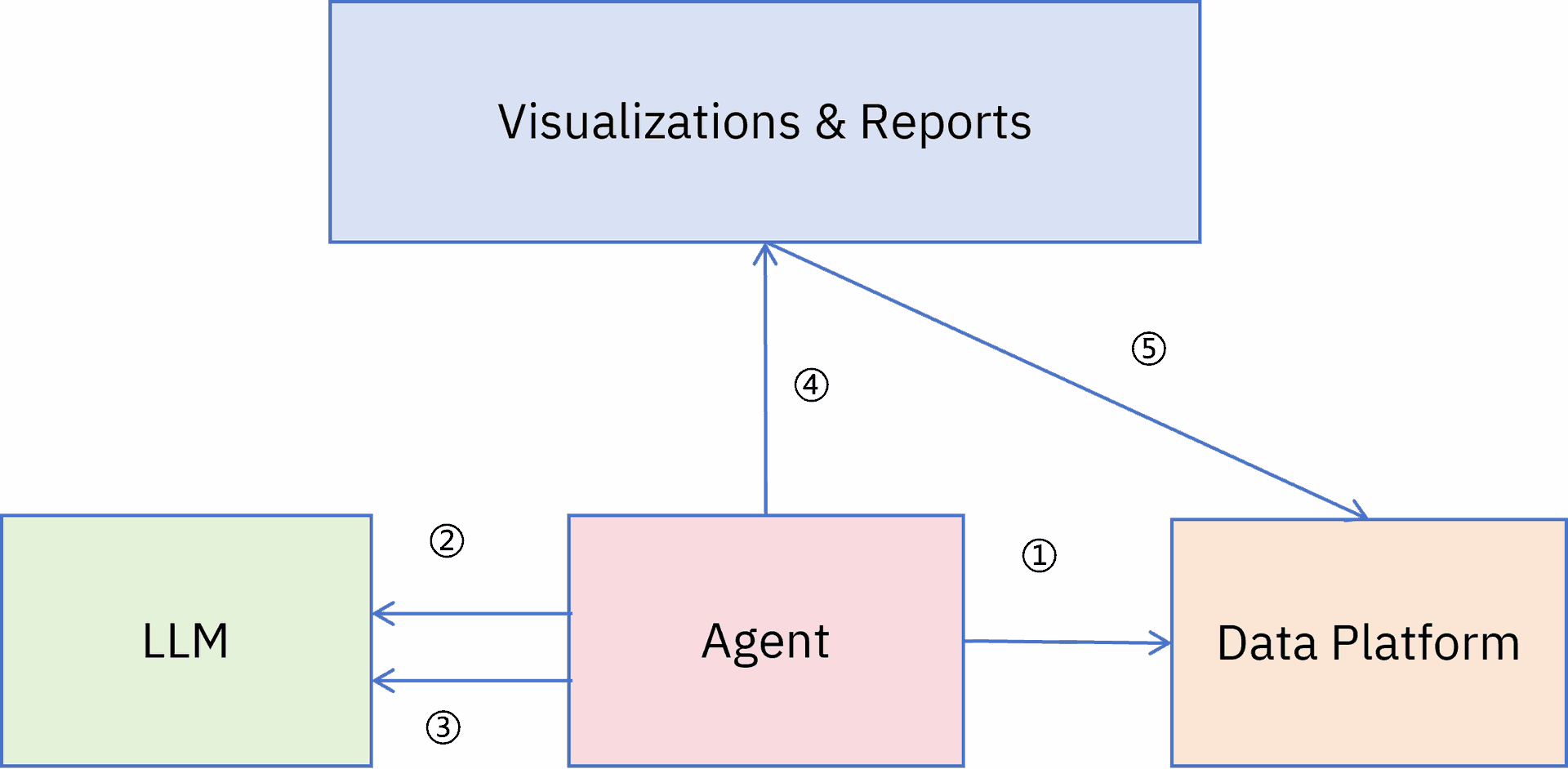
Platforms like TDengine are already moving in this direction, where the system can proactively generate dashboards, analyses, and recommendations based on the data itself, without waiting for user queries.
The system can identify what is important, what is abnormal, and where potential issues or opportunities exist. This fundamentally shifts the interaction model from query-driven to insight-driven, and from pull-based to push-based.
From Rules to Learning: AI-Powered Anomaly Detection
Anomaly detection provides a clear example of how this shift changes the workflow. In traditional systems, anomaly detection depends on predefined rules such as thresholds and conditions, which must be manually configured and maintained.
These rules are inherently limited because they cannot capture the full complexity of industrial operations. They are often too rigid, leading to false alarms in some cases and missed issues in others, especially when operating conditions change.
With AI-powered anomaly detection, the system learns the normal behavior patterns directly from the data and continuously detects deviations without requiring predefined rules. This removes one of the most time-consuming and expertise-dependent parts of industrial analytics.
For example, systems like TDengine integrate AI-driven anomaly detection directly into the data platform, allowing users to detect complex deviations without defining rules or thresholds explicitly.
From Tools to Assistants
AI also changes how users interact with industrial systems. Instead of requiring users to learn tools, define queries, or configure workflows, the system becomes an assistant that can understand user intent and respond accordingly.
Users can interact with the system using natural language to generate visualizations, define analysis tasks, or explore operational behavior. The system translates these requests into queries, analytics, and visual outputs automatically, reducing the need for technical knowledge.
Beyond that, the system can generate insights directly for panels and dashboards, explaining what is happening, whether behavior is normal, and what patterns are emerging. Even root cause analysis becomes more accessible, as the system can analyze data across multiple dimensions and suggest possible explanations automatically.
Democratizing Industrial Intelligence
The most important impact of this shift is not purely technical, but economic and organizational. By removing the need for specialized skills, AI democratizes access to advanced analytics and operational insights.
Small and medium-sized businesses, which previously could not afford dedicated data teams, can now benefit from the same level of insight generation as large enterprises. They no longer need to build complex teams or invest heavily in specialized tools to extract value from their data.
At the same time, large enterprises also benefit significantly from this shift. Analysis that previously took days or weeks can now be delivered immediately, allowing decision makers to access insights in real time.
In many cases, decision makers can even generate the analysis themselves, without waiting for technical teams or external vendors. This dramatically accelerates the decision-making process and improves organizational agility.
In platforms such as TDengine, this is reflected in capabilities like AI-generated panels, automated insights, and integrated root cause analysis, which together reduce the dependency on specialized roles.
In effect, every organization can now have a virtual data analyst working continuously on their data. This has profound implications, especially considering that there are millions of such businesses worldwide.

Context Still Matters
At the same time, AI alone is not enough to generate meaningful insights. To be effective, AI must operate on top of a well-structured data foundation that provides context.
This is where asset-centric and event-centric models become critical. They define how data relates to real-world equipment, processes, and operational scenarios, allowing AI to generate insights that are relevant and actionable.
Without this context, AI may still produce outputs, but those outputs may lack meaning or accuracy. With proper context, AI becomes a powerful tool for understanding operations rather than just processing data.
Closing Thought
For decades, industrial systems have focused on collecting data and providing tools for analysis. However, the real challenge has never been access to data, but the ability to turn data into understanding.
AI-driven operational insights remove that barrier by making it possible to generate insights without requiring deep expertise in analytics or domain modeling. This enables organizations of all sizes to understand their operations and make better decisions.
This is not just a technological improvement, but a fundamental shift. It represents a move from systems that store and display data to systems that understand and explain it.


