AI is quickly becoming a necessity for industrial systems, and organizations are moving from simply collecting and processing data to turning it into real-time intelligence.
This shift is putting pressure on traditional data historians. Products like AVEVA PI System were built for data collection and visualization, but AI and large language models (LLMs) require real-time processing, seamless integration, and interactive data exploration.
For industrial enterprises looking to modernize data infrastructure for the AI era, the key question is simple: Can your data historian support AI natively, or does it require building a separate AI stack?
This is where TDengine and PI System take fundamentally different approaches.
What Industrial Data Teams Need Today
Industrial teams have long relied on historians to provide a stable data foundation for operations. In most PI System environments, teams focus on capabilities such as:
- Reliable, real-time ingestion of time-series data from sensors and equipment
- A centralized system of record for operational data
- Visualization tools for monitoring and reporting
- Compatibility with a wide range of industrial protocols
While these capabilities remain essential, modern requirements are expanding. Increasingly, organizations need data platforms that also provide:
- Built-in support for AI and advanced analytics
- Faster and more intuitive access to insights
- Scalable infrastructure for high-volume data
- Simplified architectures that reduce tool sprawl
The role of the data historian is evolving from a system of record into a system of intelligence.
How PI System Handles Industrial Data and AI
PI System is a mature and widely adopted industrial data historian designed for reliability and scale. It provides a strong foundation for collecting and organizing operational data.
In a typical deployment, PI System includes the following components:
- Data ingestion through interfaces into a centralized Data Archive
- Asset Framework for structuring and contextualizing data
- PI Vision for dashboards and monitoring
- External systems for advanced analytics and AI
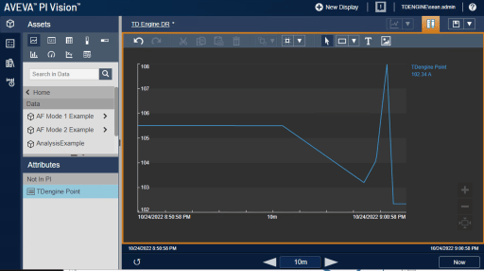
This architecture is proven and stable, but it introduces challenges when organizations try to adopt AI.
AI workflows in PI System environments usually depend on exporting data to external tools and building custom pipelines. Industrial enterprises, often without the luxury of large IT departments, are forced to manage integrations between multiple systems, and analytics capabilities are not native to the historian itself. As a result, implementing AI often becomes a complex and resource-intensive effort.
How TDengine Redefines the Data Historian with AI
TDengine is designed as an AI-powered industrial data historian, combining traditional historian capabilities with built-in intelligence.
Instead of separating storage, analytics, and AI into different layers, TDengine integrates them into a single platform. This allows organizations to:
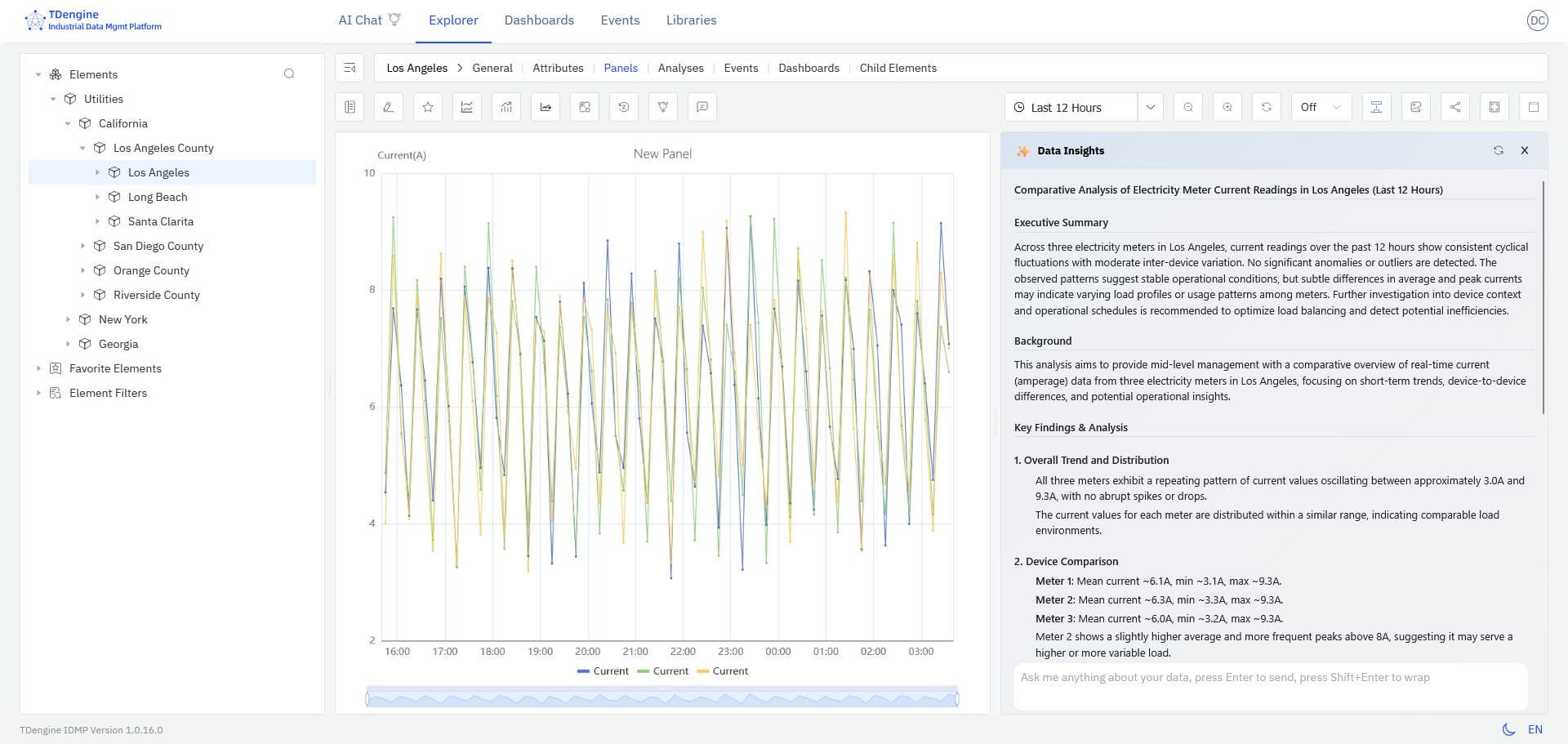
- Query industrial data using natural language
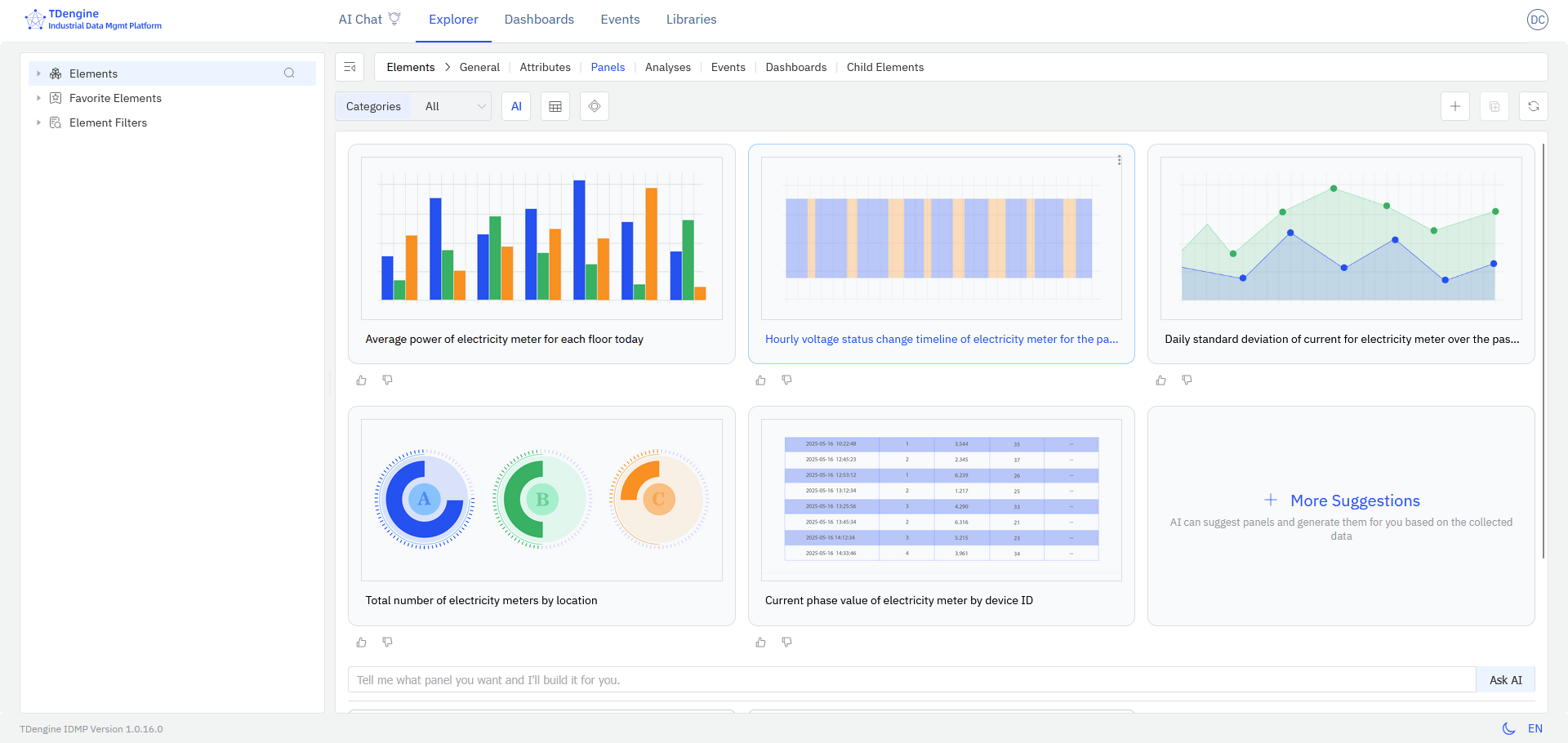
- Generate AI-powered insights for any panel or dashboard
- Use AI-suggested dashboards and analysis tasks generated based on data and business context through zero-query intelligence
- Run AI-driven analysis such as anomaly detection and forecasting directly within the system through TDgpt
From an architectural perspective, TDengine is designed to support modern environments. It provides:
- Deployment flexibility across cloud and on-prem systems
- Support for open standards such as SQL, JDBC/ODBC, and REST APIs
- Seamless integration with modern analytics and AI ecosystems
By unifying these capabilities, TDengine transforms the data historian into an active intelligence layer rather than a passive storage system.
Where TDengine and PI System Overlap
Despite their differences, TDengine and PI System share a common foundation in industrial data management.
Both platforms are capable of:
- Ingesting large volumes of time-series data in real time
- Supporting operational monitoring and visualization
- Enabling use cases such as predictive maintenance and process optimization
- Handling high-frequency sensor data reliably
Because of this overlap, TDengine can function as a full-featured industrial data historian while also extending into AI-driven use cases.
How Each Platform Handles AI and LLMs
The most important differences between PI System and TDengine become clear when examining how each platform supports AI and large language models (LLMs).
The first difference is that PI System treats AI as an external capability, while TDengine embeds it directly into the historian. In PI System environments, AI workflows typically require exporting data and integrating third-party tools. In TDengine, AI-driven analysis happens within the same platform where the data resides.
Another key difference is how users interact with data. PI System relies on dashboards and predefined queries, which require users to know what they are looking for in advance. TDengine enables natural language interaction, allowing users to ask questions and receive insights instantly using LLMs, and supports zero query intelligence, enabling users to understand their data even when they are unsure of the questions they need to ask.
A third distinction is the level of engineering effort required to operationalize AI. PI System implementations often involve building and maintaining pipelines across multiple systems. TDengine reduces this burden by providing built-in AI capabilities that shorten the path from data to insight.
Why TDengine Fits Modern AI-Driven Workloads
As industrial organizations shift toward intelligent operations, their data platforms must support AI-driven analysis, real-time decisions, and seamless integration.
TDengine is built for this shift.
- First, AI capabilities are integrated directly into the platform. Instead of building and maintaining complex pipelines, teams can move from raw data to actionable insights within a single system.
- TDengine also provides a consistent experience across cloud and on-prem environments. This makes it easier to scale AI workloads without re-architecting systems for different environments.
- From a development perspective, support for standard SQL and open interfaces allows teams to integrate AI workflows quickly without relying on proprietary tools.
- Finally, TDengine’s open architecture avoids vendor lock-in while reducing infrastructure and licensing overhead. This results in a more flexible system and a lower total cost of ownership.
When to Consider Moving Beyond PI System
Many organizations are reaching a point where modernizing data infrastructure is a critical step forward. Industrial enterprises should consider alternatives to existing historians when they are experiencing one or more of the following:
- AI initiatives are becoming a strategic priority
- Existing systems are difficult to integrate with modern tools
- Cloud or hybrid architectures are being adopted
- Costs and operational complexity are increasing
- Greater flexibility and openness are required
TDengine supports phased adoption, allowing organizations to modernize their architecture without requiring a disruptive replacement of existing systems.
Conclusion: The Future of the Industrial Data Historian
PI System remains a trusted and widely used industrial data historian. However, it was designed for a time when data collection and visualization were the primary goals.
Today, industrial organizations are focused on something more ambitious: turning data into intelligence in real time.
TDengine reflects this shift. As an AI-powered industrial data historian, it combines time-series data management, analytics, and AI into a unified platform designed for modern industrial use cases.
For organizations prioritizing AI readiness, TDengine provides a clear path forward.


