
Structure Alone Is Not Enough
In industrial systems, asset-centric modeling has long been recognized as a critical foundation. It organizes data around equipment, systems, and processes, allowing engineers to understand how a plant is structured and how different components relate to each other.
This is a major step beyond raw time-series data. Instead of working with disconnected signals, engineers can navigate data through meaningful entities—pumps, compressors, production lines, and entire facilities. Data begins to carry context.
However, structure alone is not enough.
An asset model can tell you what the system is, but it cannot fully describe what the system is doing over time. It defines relationships, but it does not capture behavior. It provides a static view of the system, but industrial operations are inherently dynamic.
Understanding structure is necessary.
Understanding behavior is essential.
Events Without Structure Are Incomplete
Event-centric modeling addresses this gap by introducing the concept of behavior. Events represent meaningful periods—startups, shutdowns, batches, transitions, and anomalies—that define how a system operates over time.
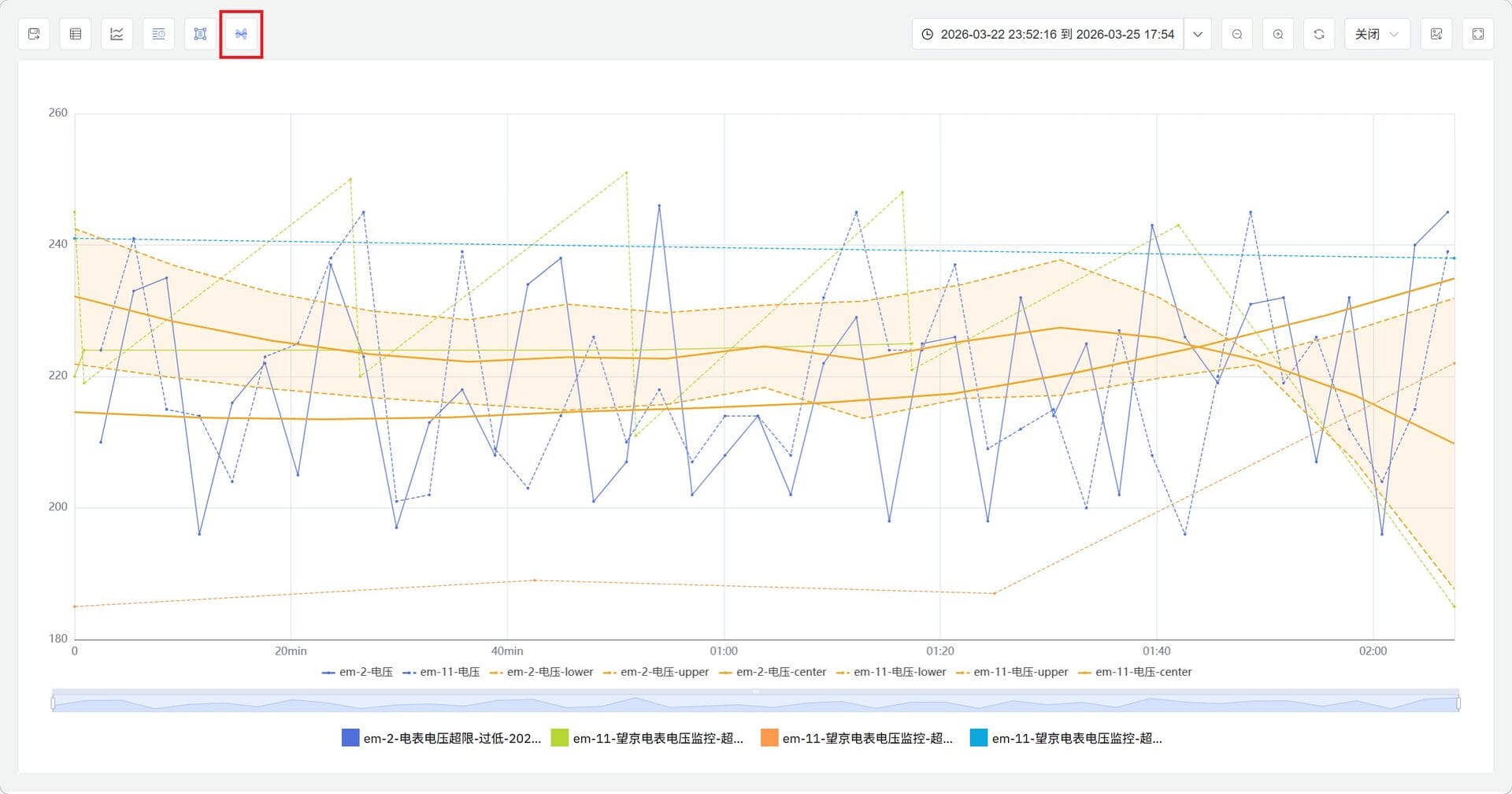
As discussed previously, event frames allow engineers to move beyond continuous signals and begin working with operational units. They make it possible to compare batches, align time-series data, generate golden profiles, and analyze deviations.
This is a powerful capability.
But events without structure are also incomplete.
An event has meaning only when it is tied to something—an asset, a system, or a process. A “batch” is not just a time window; it is a batch of a specific reactor. A “trip” is not just an anomaly; it is an event associated with a particular compressor. Without asset context, events become isolated segments of time rather than representations of real operations.
In other words, events describe behavior, but without assets, they lack identity.

The Missing Link: Combining Structure and Behavior
This leads to a fundamental insight.
Asset-centric modeling and event-centric modeling are not separate capabilities. They are two sides of the same problem.
Asset-centric modeling defines the structure of the system.
Event-centric modeling defines the behavior of the system.
Only when they are combined do we get a complete representation of industrial operations.
This combination is the missing link in most industrial data systems.
Many traditional systems focus heavily on asset models but treat events as a secondary feature. Many modern data platforms focus on data processing and analytics but lack both structured asset models and native event concepts. As a result, neither approach fully captures how industrial systems actually work.
A system without assets lacks context.
A system without events lacks meaning.
What PI System Got Right—and Where It Falls Short
PI System is one of the few platforms that supports both asset-centric and event-centric modeling.
The Asset Framework provides a strong foundation for organizing equipment, attributes, and relationships. Event Frames extend this model by introducing time-based operational context, allowing engineers to define and manage events in relation to assets.
This combination was a significant advancement.
However, in practice, the system is still primarily asset-centric. The asset model acts as the central organizing structure, while events are layered on top. Event modeling exists, but event-centric analysis is not as deeply integrated.
As discussed earlier, analyzing events — especially at scale — often requires additional tools. Use cases such as batch comparison, golden profile generation, and deviation analysis are not fully supported within the core system, leading many users to adopt specialized analytics platforms.
This reveals a subtle but important limitation.
Events are present, but they are not treated as first-class analytical entities. The system understands structure well, but it does not fully operationalize behavior.
Why This Matters in the AI Era
In the AI era, this gap becomes much more significant.
AI does not operate effectively on raw signals alone. It requires data that is structured, contextualized, and segmented into meaningful units. Asset models provide the structural context. Event models provide the behavioral segmentation.
Without assets, AI does not know what it is analyzing.
Without events, AI does not know when or why something is happening.
Only when both are present can AI begin to generate reliable insights.
For example, anomaly detection is far more meaningful when applied within the context of specific assets and specific event types. Root cause analysis becomes more accurate when events are compared across similar assets. Predictive models become more robust when trained on well-defined operational cycles rather than arbitrary time windows.
In this sense, asset-centric and event-centric modeling are not optional enhancements. They are foundational requirements for industrial AI.
Toward a Unified Industrial Data Foundation
To move forward, industrial data systems need to treat asset and event modeling as a unified foundation rather than separate layers.
This means:
- Events are defined directly in relation to assets
- Event data and time-series data are stored and queried together
- Event-based analytics is built into the core system
- Both structure and behavior are first-class components of the data model
When this happens, the system no longer just stores data or visualizes trends. It begins to represent how the system is built and how it operates over time.
This is the foundation required for the next generation of industrial systems.
Closing Thought
Industrial data is not just about signals.
It is about systems and how those systems behave.
Assets define what exists.
Events define what happens.
Only when both are modeled together can we truly understand industrial operations—and only then can AI become genuinely useful.


