
In recent years, modern data platforms like Snowflake and Databricks have transformed how organizations manage and analyze data. Their scalability and analytics capabilities are impressive.
But when it comes to industrial operations, there is one concept that remains essential—and often overlooked by modern data platforms: Asset-centric data modeling.
This concept was popularized decades ago by the AVEVA PI System through its Asset Framework. While many technologies have evolved since then, the core idea remains just as important today—perhaps even more so in the era of AI.
Industrial Data Is Not Just Time Series
Industrial systems generate massive volumes of telemetry data:
- temperatures
- pressures
- flows
- vibration signals
- energy consumption
- equipment states
At first glance, these look like simple time-series signals. But in reality, every signal belongs to something in the physical world. A vibration signal is not just a data stream. It belongs to a specific motor, which belongs to a specific production line, which belongs to a specific plant.
In other words, industrial data always exists in the context of physical assets. Without this context, data quickly becomes meaningless.
Why Raw Telemetry Is Not Enough for AI
Many modern data platforms focus on storing large volumes of raw telemetry. But AI systems cannot reason effectively about raw signals alone. AI needs structure and semantics. For example, consider a simple question: “Why did production drop yesterday?”
To answer this, an AI system must understand:
- which equipment is involved
- how machines are connected
- what processes are running
- which events occurred during that time
If the data platform only stores millions of sensor signals without asset relationships, AI has no understanding of the operational system. It only sees numbers.
Asset Models Provide Operational Semantics
Asset-centric data modeling introduces structure into industrial data.
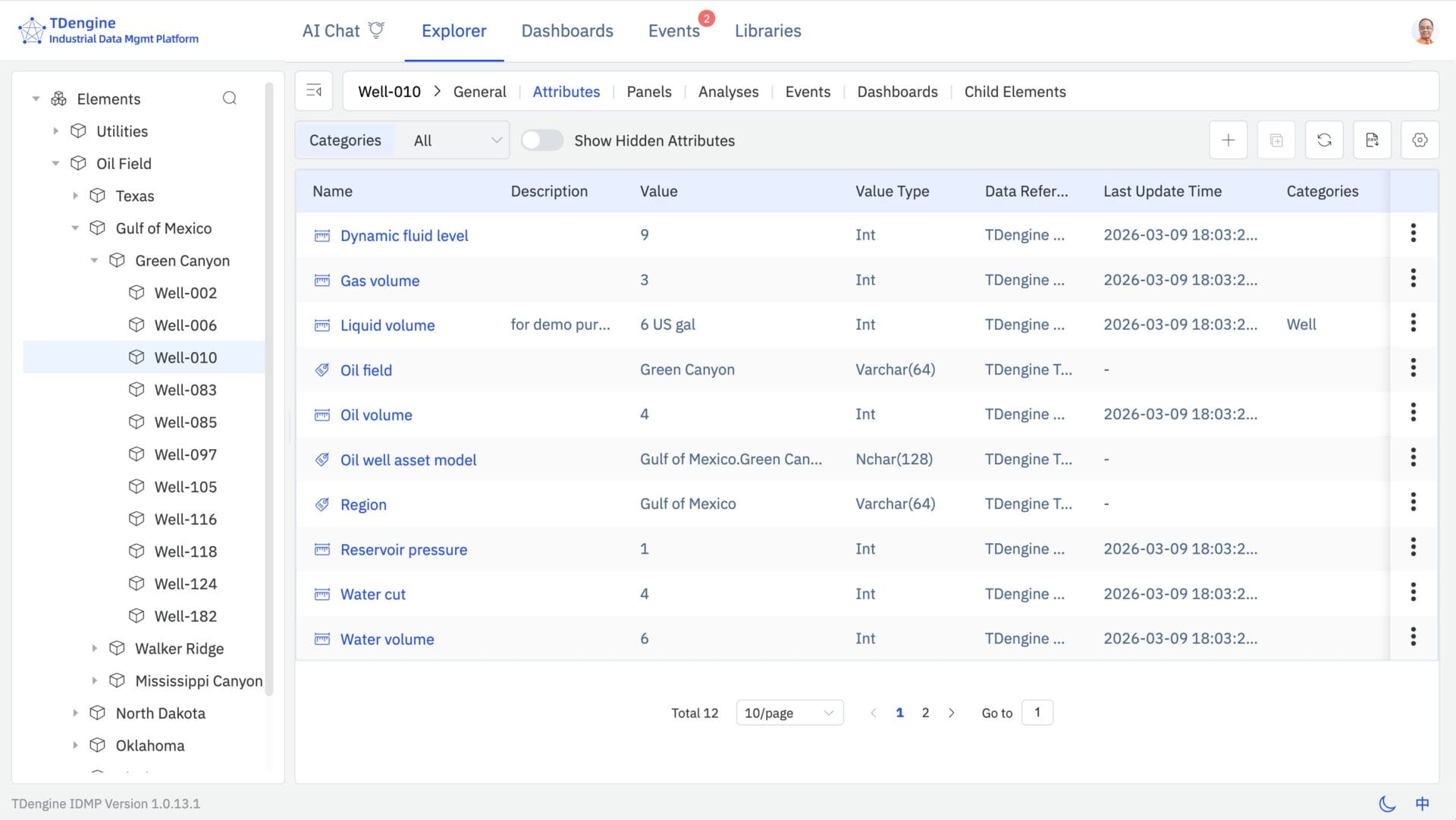
A typical asset hierarchy might look like this:
Plant
├── Production Line A
│   ├── Mixer
│   ├── Heater
│   └── Pump
└── Production Line B
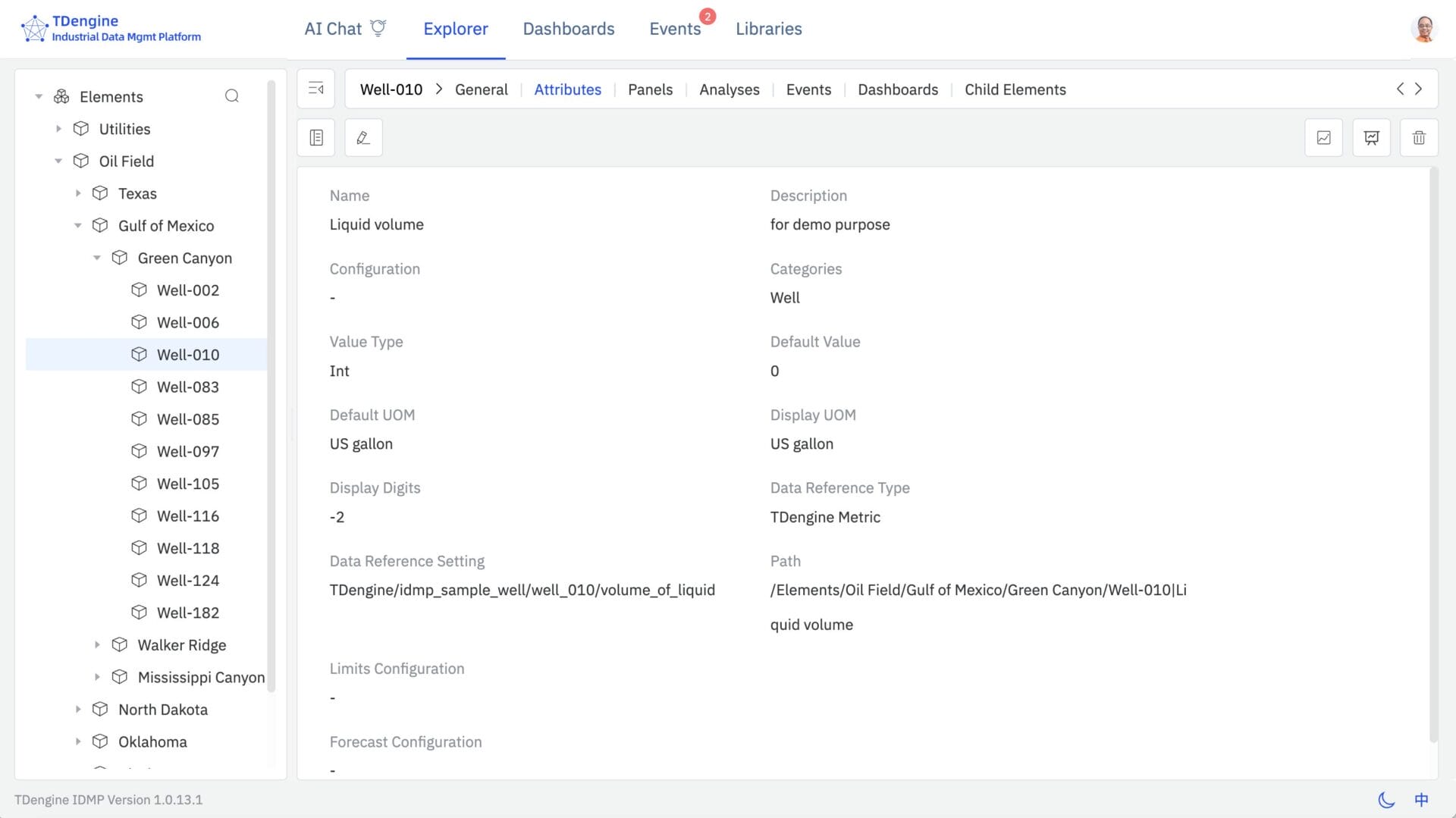
Each asset contains attributes such as:
- temperature
- vibration
- power consumption
- operating status
This structure provides operational semantics that are essential for both humans and AI systems.
Engineers navigate systems by equipment.
AI systems reason about systems through relationships between assets.
The Missing Layer in Many Modern Data Platforms
Modern cloud data platforms are excellent at storing and processing large datasets. However, most of them treat industrial telemetry simply as: timestamp | tag | value
The responsibility of adding meaning to the data is pushed to downstream applications.
This approach works for traditional analytics pipelines but becomes problematic for operational AI systems that require deeper understanding of industrial processes.
Without an asset-centric model, every AI project must first rebuild the operational context before meaningful analysis can begin.
Asset Context Enables Industrial AI
In an AI-driven operational environment, asset context enables several critical capabilities:
Root Cause Analysis
When a problem occurs, AI can trace relationships between assets and identify the true source of failure.
Event Understanding
Operational events such as equipment trips or production batches can be understood in the context of the affected assets.
Cross-Asset Reasoning
AI can analyze interactions between different machines within a process.
Explainable Insights
Insights become interpretable because they reference real-world equipment and processes.
Without asset context, AI outputs are often difficult to interpret or trust.
The Evolution: From Historian to AI-Ready Industrial Data Foundation
Traditional historians introduced asset-centric modeling primarily to improve visualization and navigation.
In the AI era, the role of asset models becomes even more fundamental. They act as the semantic layer that bridges raw telemetry and intelligent decision-making. A modern industrial data platform should therefore combine:
- high-performance time-series infrastructure
- asset-centric data modeling
- real-time analytics
- AI-driven insights
Only when these layers work together can intelligence truly emerge from operational data.
Conclusion
The AI era will not eliminate the need for asset-centric modeling. In fact, it makes it even more important.
Raw telemetry provides signals. Asset models provide meaning.
And without meaning, AI cannot understand the physical world that industrial systems represent.
The future of industrial data platforms lies in combining data, context, analytics, and AI into a unified foundation where intelligence can emerge directly from operational data.


