TDengine Proof of Concept (PoC) Packages
Evaluate TDengine using real data, with a clear scope and outcome
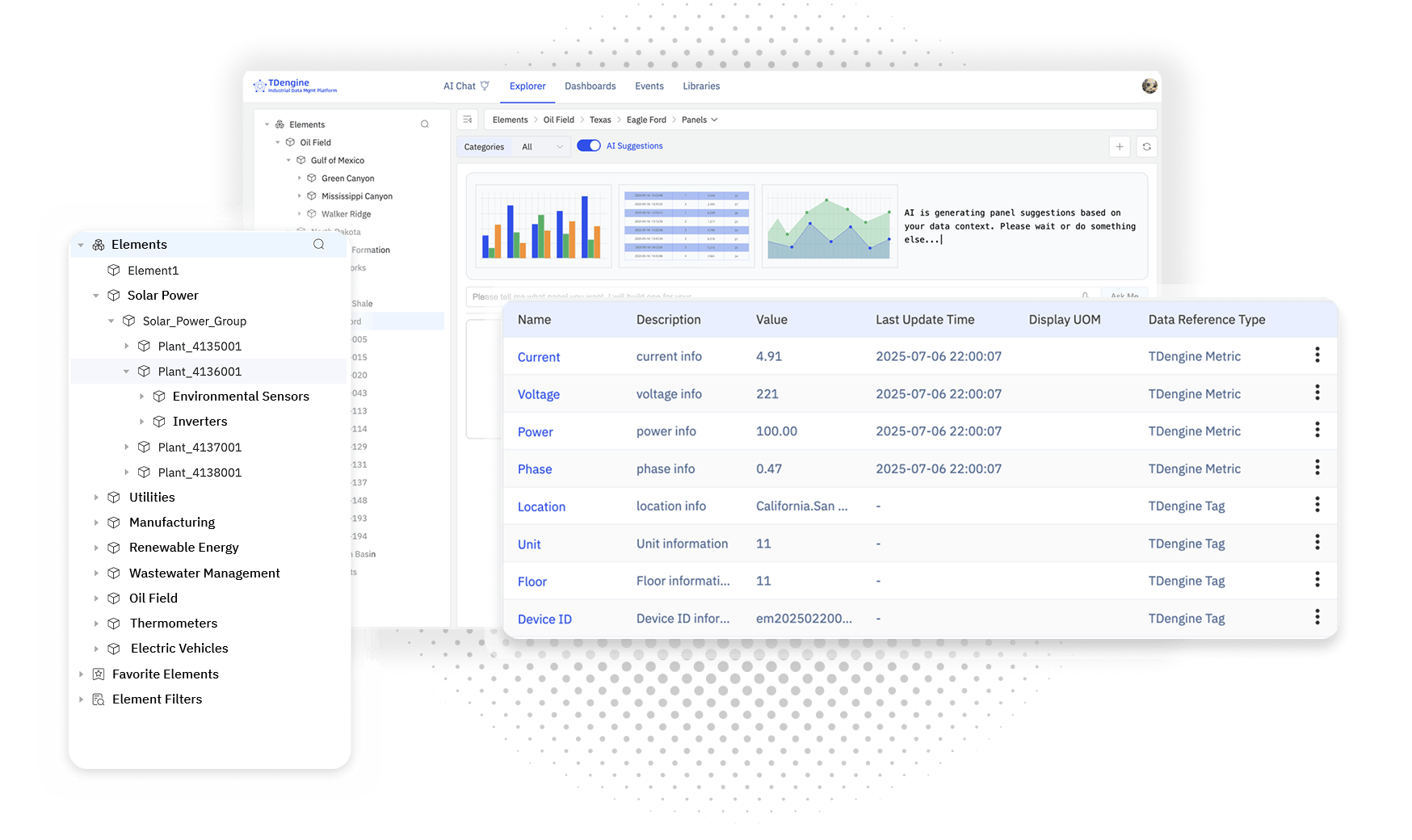
What the Proof of Concept Is
TDengine Proof of Concept (PoC) packages are designed to help you validate whether TDengine fits your operational data needs before committing to production.
A PoC focuses on:
- Ingesting real operational data
- Organizing that data in a usable model
- Querying and visualizing it in realistic workflows
- Reaching a clear “go / no-go” decision
PoCs are structured, time-bound, and practical. They are not open-ended pilots or custom development projects.
Choose the Right PoC Package
TDengine offers two PoC packages, depending on your situation.
PoC A — First-Time Historian
Recommended if you:
- Do not currently use an industrial data historian
- Are consolidating OT or IoT data for the first time
- Want to evaluate a modern data platform for operations
What This PoC Validates
- Reliable ingestion from your data sources
- Data organization and structure
- Query and dashboard performance on real data
- Basic operational workflows
Typical Scenarios
- Greenfield historian deployment
- Equipment or site monitoring
- OT data centralization
- Pilot industrial data platform
Scope
- One evaluation environment
- A limited set of assets and metrics
- One or two data sources (for example OPC UA or MQTT)
- Standard dashboards and queries
Timeline
- Typical duration: 45–60 days
What You Receive
- Live data ingestion
- Organized data model
- Operational dashboards
- Performance validation
- PoC summary and recommendation
What Success Looks Like
- Data flows reliably into the system
- Queries and dashboards are responsive
- Operational data is easy to explore and understand
- You can clearly assess readiness for production
PoC B — PI Alternative
Recommended if you:
- Use PI System today
- Are evaluating alternatives for new sites or expansions
- Want to compare workflows, performance, and architecture
What This PoC Validates
- Comparable ingestion and data organization
- Query and dashboard responsiveness
- Operational usability for selected workflows
- Architectural and cost considerations for production
Typical Scenarios
- New site or system not yet onboarded to PI
- Cost or scalability concerns
- Modernization initiatives
- Parallel evaluation alongside PI
Scope
- A representative subset of assets and metrics
- Selected workflows for comparison
- Standard dashboards and analytics
- No full historical migration beyond agreed samples
Timeline
- Typical duration: 45–60 days
What You Receive
- Live or sample data ingestion
- Organized data model
- Comparable dashboards and workflows
- Performance and usability assessment
- PoC summary and recommendation
What Success Looks Like
- Selected workflows work as expected
- Performance meets operational needs
- Clear understanding of how production deployment would look
What PoCs Include
Both PoC packages include:
- A clearly defined scope and timeline
- Use of TDengine reference architecture
- Standard dashboards and queries
- Guidance on production deployment options
- A structured review at the end of the PoC
What PoCs Do Not Include
To keep evaluations fast and focused, PoCs do not include:
- Custom application development
- Unlimited scale or stress testing
- Full historical data migration
- Production-grade high-availability tuning
- One-off or experimental architectures
If your requirements go beyond this scope, the next step is a design and architecture discussion, not an extended PoC.
Sizing and Deployment Expectations
PoCs follow TDengine’s Reference Sizing and Deployment Guidelines, which define:
- Appropriate PoC scale
- Reasonable starting points for production
- Supported deployment patterns
This ensures results are realistic and repeatable.
What Happens After the PoC
At the end of the PoC, you will have enough information to:
- Proceed to production
- Adjust scope or architecture
- Decide not to move forward
The goal is a clear, informed decision.
Take the Next Step
- Choose the PoC package that fits your situation
- Align on scope and timeline
- Begin the evaluation


